Excited to feature this blog post from our guest author, Hannah Nossbaum! Hannah has been working with Good Mood Foodies this summer, helping create evidence-based nutrition content that's both practical and easy to apply.

Hannah Nossbaum is an incoming senior at Franklin & Marshall College pursuing a degree in Public Health. She is passionate about making nutrition approachable and enjoyable by creating evidence-based content that helps people build sustainable, healthy habits. After graduation, Hannah plans to become a Registered Dietitian, where she hopes to empower individuals to improve their overall health while fostering a positive relationship with food.
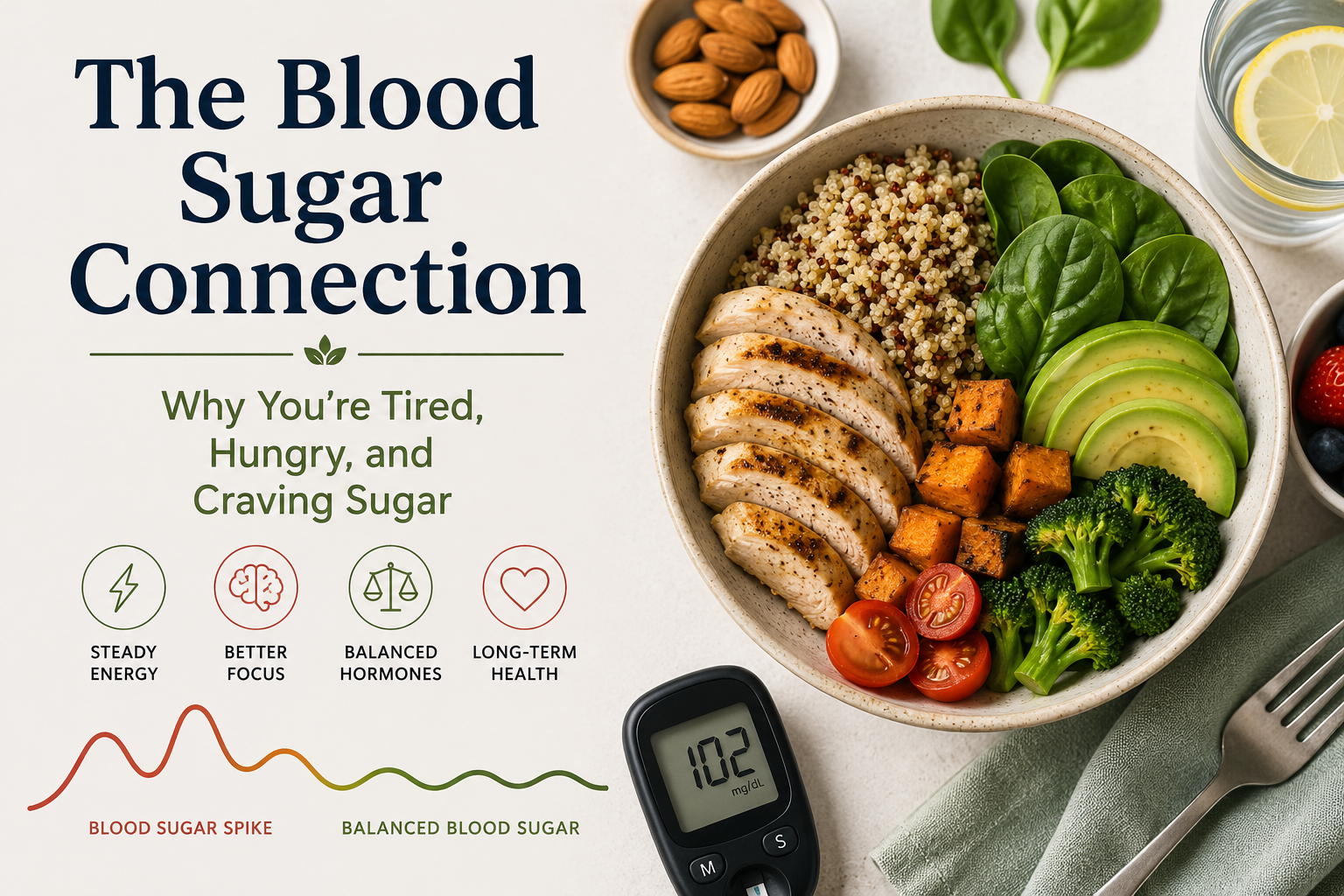
Fueling Your Body From the Inside Out
Have you ever felt energized after a meal only to crash a few hours later? Or found yourself reaching for a sugary snack when that afternoon slump hits? If so, you’re not alone, and it’s not about willpower. These experiences are often tied to changes in your blood sugar and the hormones that regulate it.
With so many diets, wellness trends, and conflicting messages out there, blood sugar has become a very hot topic, and for good reason. Blood sugar affects everyone, not just those living with diabetes. It plays an important role in how energized you feel, how well you concentrate, how hungry you get between meals, and even how your body responds to stress. Understanding how blood sugar and these key hormones work together can help you make nutrition choices that support steady energy, fewer cravings, and long-term metabolic health.
What Is Blood Sugar and Why Does It Matter?
Blood sugar, also known as blood glucose, is the amount of glucose circulating in your bloodstream. Glucose comes primarily from carbohydrates in foods such as fruit, grains, dairy, legumes, and sweets. It’s the body’s primary source of energy and is especially important for fueling the brain, nervous system, and working muscles. Keeping blood glucose within a healthy range allows these tissues to work efficiently throughout the day.
After you eat carbohydrates, blood sugar naturally rises, signaling the pancreas to release insulin. Insulin acts like a key, helping glucose move out of the bloodstream and into your cells, where it’s used for energy or stored for later.
How Blood Sugar Affects Energy Levels
One of the most noticeable effects of blood sugar is its impact on energy levels.
When blood sugar rises gradually after a balanced meal, the body receives a steady supply of fuel. This typically results in stable energy, improved concentration, and better overall performance throughout the day.
On the other hand, eating a large amount of quickly digested carbohydrates on their own without much protein, fat, or fiber can cause blood sugar to rise quickly. A rapid rise can sometimes be followed by a dip as insulin moves glucose out of the bloodstream. For some people, these swings can bring on fatigue, hunger, irritability, and cravings for a quick pick-me-up, a cycle that can feel hard to break. It’s worth remembering that everyone responds a little differently.
Short-term, unstable blood sugar can show up as sugar cravings, fatigue, and increased hunger. Over time, blood sugar that stays consistently elevated, rather than the occasional post-meal rise, is what’s more strongly linked to insulin resistance, which is why steady daily habits matter.
The Hormones Behind Blood Sugar Regulation
Blood sugar regulation relies on several hormones working together to maintain a steady supply of energy despite changes in food intake, activity level, and stress.
Insulin — Produced by the pancreas, insulin helps move glucose from the bloodstream into cells, where it’s used for energy or stored for later.
Glucagon — Glucagon has the opposite effect. When blood sugar falls between meals, it signals the liver to release stored glucose to keep levels steady.
Cortisol — During periods of physical or emotional stress, cortisol raises blood sugar to make sure the body has enough fuel. Chronically elevated cortisol, however, may contribute to insulin resistance over time.
Ghrelin and leptin — These hormones help regulate hunger and fullness. Ghrelin signals hunger, while leptin promotes feelings of fullness and satisfaction.
Poor sleep, chronic dieting, and blood sugar swings can all influence these hormones, making hunger cues harder to read and increasing the likelihood of cravings or overeating. Together, this system is designed to keep your blood sugar and energy levels stable.
Everyone experiences changes in blood sugar throughout the day, that’s completely normal. It’s blood sugar that stays elevated over the long term that can raise the risk of conditions like prediabetes and type 2 diabetes, which is why supportive daily habits matter for both how you feel now and your long-term health.
What Does Balanced Blood Sugar Actually Look Like?
Here’s the good news: balanced blood sugar doesn’t mean cutting out carbs or eating perfectly. It’s simply about building meals and daily habits that give you a steady supply of energy while smoothing out the big swings.
A balanced meal often includes:
A source of protein such as chicken, fish, tofu, eggs, or Greek yogurt.
High-fiber carbohydrates such as fruit, beans, oats, or whole grains.
Healthy fats from foods such as avocado, nuts, seeds, or olive oil.
Plenty of colorful vegetables for extra fiber, vitamins, and minerals.
Beyond nutrition, regular physical activity, adequate sleep, and stress management all play important roles in supporting healthy blood sugar.
Tips for Supporting Healthy Blood Sugar
Small, consistent habits often make a bigger difference than drastic changes. A few strategies that can help:
Include protein with meals and snacks.
Reach for fiber-rich foods such as fruits, vegetables, whole grains, beans, and legumes.
Try not to skip meals when you can help it.
Pair carbohydrates with protein or healthy fats.
Stay hydrated throughout the day.
Prioritize good sleep.
Stay physically active throughout the week, and include strength training when you can.
Consider a 10–15 minute walk after meals.
Examples of Balanced Meals
Breakfast: Greek yogurt with berries and nuts, or eggs with whole-grain toast and fruit.
Lunch: A turkey sandwich with vegetables and fruit, or a grain bowl with chicken, quinoa, and roasted vegetables.
Dinner: Salmon with brown rice and roasted vegetables, or a stir-fry with tofu, vegetables, and rice.
Snacks: Apple with peanut butter, or crackers and cheese.
Your blood sugar game plan
Blood sugar is much more than a number, it reflects how your body produces, stores, and uses energy. Every meal, snack, bit of movement, and night of sleep plays a part. By building balanced meals, staying active, managing stress, and keeping consistent daily habits, you can support steadier energy, better focus, fewer cravings, and better long-term metabolic health. Small changes, made consistently, often have the greatest impact over time.